PTSD Treatment Tracking with PCL5 & EMDR/CPT
Trauma's invisible wounds need targeted therapies. These approaches must be measurable and adaptable—going beyond symptom management alone. If you are healing from PTSD, understanding how your progress can be tracked through evidence-based therapies like EMDR and Cognitive Processing Therapy (CPT) is crucial. How can you tell if your recovery is moving in the right direction?
This guide explains how PCL5 assessments serve as critical benchmarks in your recovery journey. These tests provide concrete data points that both you and your therapist can use to evaluate how well a treatment is working. Before you dive into the details of therapy, you can start your test to establish your current baseline score.
By monitoring your symptoms regularly, you move from "feeling" better to "knowing" you are getting better. This article will help you understand the connection between your PCL5 score and the most effective PTSD treatments available today.
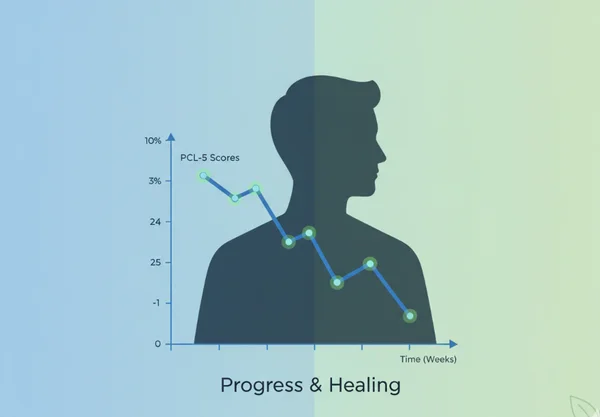
Understanding PCL5 Severity Scales and Treatment Monitoring
Tracking your mental health is just as important as tracking physical health. In the world of trauma recovery, the PCL5 (PTSD Checklist for DSM-5) is the gold standard for measuring the severity of symptoms. It is a 20-item self-report questionnaire that asks about the experiences you have had in the past month.
How PCL5 Serves as a Baseline and Progress Metric
When you begin therapy, the first step is often finding a baseline score. This is your starting point. On the PCL5, scores range from 0 to 80. A higher score typically indicates more severe symptoms. By taking an online PCL5 test at the start of your journey, you create a point of comparison for the future.
As therapy continues, you should retake the assessment every few weeks or months. This allows you to see if the score is decreasing. A drop in the score is a clear indicator that the specific therapy—whether it is EMDR, CPT, or another method—is helping you process your trauma. Without this metric, it can be hard to notice small improvements when you are still dealing with daily stress.
The Science Behind Score Changes: What Clinicians Look For
Psychologists and counselors do not just look at the total number. They look for "clinically significant" changes. Usually, a drop of 5 to 10 points on the PCL5 scale is considered a reliable sign that a person is responding to treatment. If the score drops by more than 10 points, it is a strong signal of significant clinical improvement.
Clinicians also use these scores to see which specific PTSD symptom clusters are improving. For example, your "avoidance" symptoms might decrease before your "hyperarousal" symptoms do. Understanding these nuances helps professionals tailor their approach to your unique needs. You can see your results immediately after completing the assessment to share with your provider.
EMDR Therapy Integration with PCL5 Assessment
Eye Movement Desensitization and Reprocessing (EMDR) is a popular and effective therapy for PTSD. It focuses on changing how a traumatic memory is stored in the brain. Instead of just talking about the event, EMDR uses bilateral stimulation—like side-to-side eye movements—to help the brain process the memory safely.
Measuring Desensitization Progress Through PCL5 Scores
The "D" in EMDR stands for Desensitization. This means that over time, the traumatic memory becomes less painful and less vivid. The PCL5 is an excellent tool for measuring this change. If EMDR is working, you will notice that the "Intrusion" symptoms on the PCL5 (like nightmares or flashbacks) start to score lower.
As the brain reprocesses the trauma, the physical distress associated with the memory fades. By regularly using a confidential PCL5 tool, you can track this desensitization in real-time. It provides a sense of hope to see the numbers go down as your mind heals.
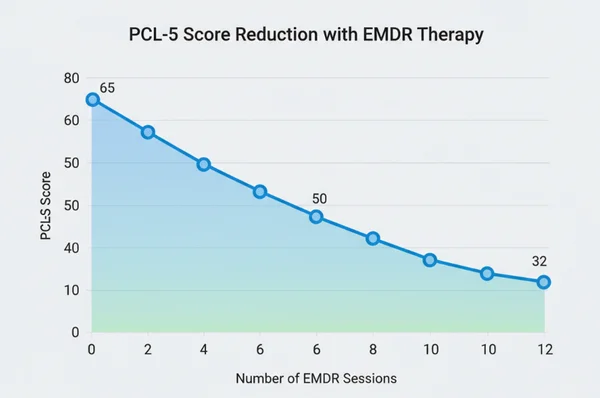
Case Study: From PCL-5 Score of 65 to 32 After 12 EMDR Sessions
To understand how this looks in real life, consider a common scenario. A patient starts EMDR with a baseline PCL5 score of 65. This high score indicates severe distress and significant impact on daily life. After 6 sessions, the patient retakes the test and sees a score of 50. They feel slightly better, and the data confirms the progress.
By the 12th session, after processing the core traumatic events, the score drops to 32. A score of 32 or 33 is often used as a "cut-off" point, where symptoms may no longer meet the full diagnostic criteria for PTSD. This objective data helps the patient feel confident that the hard work in therapy is paying off.
Adjusting Treatment Plans Based on PCL5 Feedback
What happens if the score does not move? This is where the PCL5 is most valuable for clinicians. If a patient has completed several sessions of EMDR but their score remains high, it tells the therapist that something is blocked.
Perhaps there is a different "target" memory that needs attention. Alternatively, the patient might need more preparation before moving forward. Using the feedback from the PCL5 assessment ensures that therapy does not get stuck in a rut. It allows for a dynamic and responsive treatment plan.
Cognitive Processing Therapy (CPT) and PTSD Symptom Clusters
Cognitive Processing Therapy (CPT) is another highly recommended treatment. Unlike EMDR, which focuses on memories, CPT focuses on your thoughts and beliefs. It helps you identify "stuck points"—thoughts like "It was my fault" or "The world is 100% dangerous"—that keep you trapped in the trauma.
How PCL5 Captures Changes in Maladaptive Beliefs
Trauma often changes how we view ourselves and others. These are called maladaptive beliefs. The PCL5 has a specific section called "Negative Alterations in Cognition and Mood." This section asks about feelings of guilt, blame, and the inability to feel positive emotions.
When you engage in CPT, you learn to challenge these thoughts. As your perspective shifts, your scores on these specific PCL5 questions will begin to drop. This change shows that you are not just managing symptoms; you are fundamentally changing the way you think about the past. To check your current cognitive symptoms, take the test today.
The Four PCL5 Symptom Clusters and Their Response to CPT
The PCL5 organizes 20 symptoms into four clusters based on the DSM-5. CPT is particularly effective at targeting several of these:
- Intrusions: Flashbacks and distressing memories.
- Avoidance: Staying away from people, places, or thoughts related to the trauma.
- Negative Alterations in Cognition/Mood: The "stuck points" mentioned above.
- Hyperarousal: Feeling "on edge," irritable, or having trouble sleeping.
CPT often leads to a significant reduction in the Avoidance and Cognition clusters first. By tracking each cluster individually through an AI-driven report, you can see exactly which parts of your life are improving the most.
Creating a Personalized PCL5 Progress Dashboard
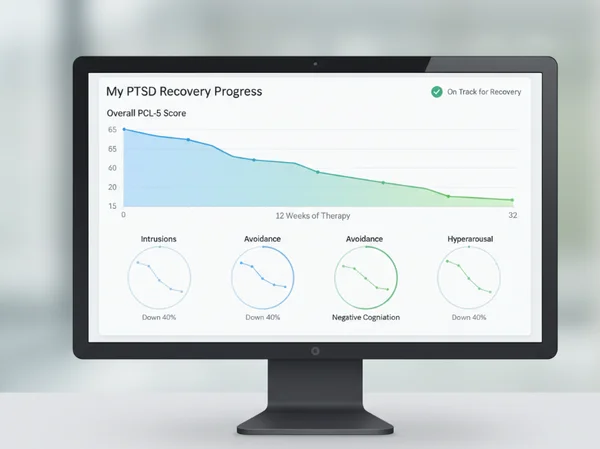
Visualize your progress to stay motivated. Track scores biweekly on a simple dashboard. If you use your secure results dashboard, you can access personalized insights that go beyond just a number.
A personalized dashboard reveals symptom patterns. For example, hyperarousal scores may rise during hectic work weeks but improve with consistent self-care. This level of self-awareness is a powerful tool in long-term recovery. Start your assessment to begin your own data-driven recovery plan.
Your Roadmap to Measurable PTSD Recovery
Recovery from PTSD is a journey that requires courage, patience, and the right tools. By integrating the PCL5 assessment into evidence-based therapies like EMDR and CPT, you transform your healing process into a measurable roadmap. You no longer have to wonder if you are getting better; the data will show you the way.
Track your healing effectively with three key steps:
- Establish a baseline score early to track your starting point.
- Use regular assessments to confirm that your therapy (EMDR or CPT) is working.
- Work with your therapist to adjust your treatment if the scores suggest a plateau.
Begin your recovery journey by understanding your symptoms today. Try this test now to get your immediate score and unlock deeper insights into your symptoms.
Frequently Asked Questions About PCL5 Treatment Tracking
How often should I take the PCL5 during PTSD treatment?
Most experts recommend taking the PCL5 every 2 to 4 weeks, or at the start of every new phase of therapy. This frequency is enough to show progress without becoming overwhelming. You can easily check your score online whenever you feel a shift in your symptoms.
Interpreting Score Fluctuations
You might notice your score rising initially—this often means you're courageously facing tough memories. It is common for scores to increase slightly when you first start EMDR or CPT. This happens because you are beginning to face memories you previously avoided. An increase isn't a sign of failure; it often means you are doing the hard work. If the score stays high for a long time, discuss it with your therapist.
Can PCL5 scores predict how long therapy will take?
While a very high baseline score (above 60) may suggest that more intensive or longer-term therapy is needed, everyone's healing pace is different. The PCL5 is better at showing progress than predicting an exact end date. However, seeing a steady decline in your PCL5 results can give you a better idea of your timeline.
Are there limitations to using PCL5 for treatment tracking?
The PCL5 is a screening and tracking tool, not a diagnostic one. It relies on your self-reporting, so it is important to be as honest as possible. It works best when paired with professional clinical judgment. You can use our AI-driven PTSD assessment platform to get a clear summary to share with your provider.
How do I share my PCL5 progress with my therapist?
You can print your results or show them the digital report from your dashboard during your session. Many therapists appreciate it when clients bring objective data. It helps them see which symptoms are bothering you the most right now, making your therapy sessions much more efficient.