PCL5 Test vs. IES-R vs. CAPS-5: Choosing Your PTSD Assessment Tool
Navigating the world of psychological assessments for Post-Traumatic Stress Disorder (PTSD) can feel overwhelming. With acronyms like PCL-5, IES-R, and CAPS-5, it’s easy to get confused about which tool is right for which purpose. As someone passionate about making psychology accessible, my goal is to demystify these powerful instruments. What is the difference between a screening tool and a diagnostic interview, and how do you choose the right one?
This guide will break down three of the most recognized PTSD screening tools and assessments. We will explore their unique applications, strengths, and limitations to help you understand the landscape of trauma evaluation. Whether you are taking a personal first step toward understanding your experiences, a student, or a clinician, this comparison will provide clarity and direction. For those seeking an accessible starting point, an online PCL-5 assessment can be an invaluable resource.
Understanding the PCL-5 for Comprehensive PTSD Assessment
The PTSD Checklist for DSM-5, or PCL-5, is one of the most widely used self-report measures for assessing PTSD symptoms. It is a foundational tool for preliminary screening and monitoring symptom changes over time.
What is the PCL-5 and Its Purpose in Screening?
The PCL-5 is a 20-item questionnaire that asks individuals to rate how much they have been bothered by specific PTSD symptoms over the past month. Each question directly corresponds to a symptom criterion outlined in the Diagnostic and Statistical Manual of Mental Disorders, 5th Edition (DSM-5). Its primary purpose is not to diagnose but to screen for PTSD and measure the severity of symptoms. Think of it as a thermometer for PTSD symptoms—it gives you a crucial reading, but a doctor is needed to interpret what that reading means in a larger health context.
Key Features and How PCL-5 Scoring Works
The standout feature of the PCL-5 is its alignment with current diagnostic criteria. Respondents rate each symptom on a 5-point scale, from 0 ("Not at all") to 4 ("Extremely"). The PCL-5 scoring process involves summing the scores for all 20 items, resulting in a total severity score ranging from 0 to 80. A higher score suggests greater symptom severity. While a provisional PTSD diagnosis can be considered with a cutoff score (often 31-33), it is critical to remember this is for screening purposes only.
When to Utilize the PCL-5: Ideal Applications
The PCL-5 is incredibly versatile. It's ideal for:
- Personal Self-Assessment: Individuals who have experienced trauma can use it to confidentially gauge their symptoms. An online PCL-5 test provides a private and immediate way to get a preliminary understanding.
- Clinical Settings: Therapists use it to quickly assess a new client's symptom profile and to track progress throughout treatment.
- Research: Researchers rely on the PCL-5 for its strong psychometric properties to measure PTSD symptoms across large populations.
Exploring the Impact of Event Scale-Revised (IES-R)
The Impact of Event Scale-Revised, or IES-R, is another widely respected self-report questionnaire. However, its focus is slightly different from the PCL-5.

IES-R: Measuring Subjective Distress and Trauma Impact
The IES-R is a 22-item measure designed to assess the subjective distress caused by a traumatic event. It evaluates three core symptom clusters: intrusion (unwanted thoughts and memories), avoidance (avoiding reminders of the trauma), and hyperarousal (feeling on edge or jumpy). Unlike the PCL-5, it was not specifically designed to map directly onto the complete DSM-5 criteria for PTSD, as it omits symptoms related to negative alterations in cognitions and mood.
Strengths and Limitations of the IES-R in Practice
The primary strength of the IES-R is its long history and extensive validation in research for measuring post-traumatic stress reactions. It is excellent at capturing the emotional trauma impact of an event. However, its main limitation in today's clinical landscape is its lack of full alignment with the DSM-5. This means it may not capture the complete picture of PTSD as currently defined, which is a key advantage of the PCL-5.
The Gold Standard: Clinician-Administered PTSD Scale (CAPS-5)
While the PCL-5 and IES-R are self-report measures, the CAPS-5 is in a different category entirely. It is considered the "gold standard" for PTSD diagnosis.

Why CAPS-5 is the Definitive Diagnostic Tool for PTSD
The Clinician-Administered PTSD Scale for DSM-5, or CAPS-5, is a structured clinical interview. This means it is not a checklist you fill out on your own. Instead, a trained clinician conducts a 30-60 minute interview to thoroughly assess the frequency and intensity of each PTSD symptom, its impact on functioning, and the validity of the symptom report. The CAPS-5 clinical interview allows a professional to ask follow-up questions and use clinical judgment, leading to a reliable and definitive clinical diagnosis.
When is a CAPS-5 Assessment Necessary?
A CAPS-5 is necessary when a formal PTSD diagnosis is required. This is common in situations such as:
- Determining eligibility for disability benefits.
- Legal and forensic evaluations.
- Comprehensive treatment planning where diagnostic clarity is essential.
- Clinical trials where precise diagnosis is paramount.
It is the final, authoritative step that follows a preliminary screening, such as one done using the PCL-5 online test.
PCL-5 vs. IES-R vs. CAPS-5: A Comparative Analysis
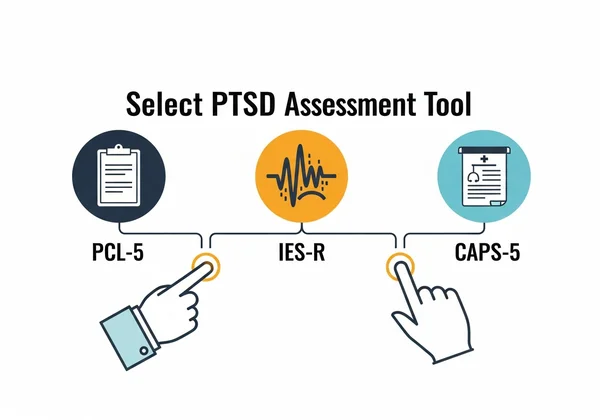
Understanding the right tool for the job is crucial. Here’s a direct comparison to help you distinguish between these three important trauma assessment tools.
Purpose & Administration: Screening vs. Clinical Diagnosis
- PCL-5: A self-report tool for preliminary screening and symptom monitoring based on DSM-5 criteria.
- IES-R: A self-report tool for measuring subjective distress after trauma, less aligned with current DSM-5 criteria.
- CAPS-5: A clinician-administered structured interview for formal clinical diagnosis.
Time Commitment & Expertise Required for Each Assessment
- PCL-5 & IES-R: Quick to complete (5-10 minutes) and can be self-administered. Anyone can take the PCL-5 online for an initial score.
- CAPS-5: Requires 30-60 minutes and must be administered by a trained clinician with expertise in PTSD.
Psychometric Properties: Reliability and Validity Compared
All three instruments have strong psychometric properties, meaning they are reliable and valid measures. However, their validity is tied to their purpose. The PCL-5 is highly valid for screening against DSM-5 criteria. The IES-R is valid for measuring general post-traumatic distress. The CAPS-5 is the most valid tool for making a formal PTSD diagnosis.
Choosing the Right PTSD Assessment Tool for Your Needs
- For a quick, confidential, and accessible first step: The PCL-5 is the best choice. It aligns with modern diagnostic standards and provides a clear severity score. You can start your screening on our platform.
- For research on general traumatic stress: The IES-R remains a solid option, though the PCL-5 is often preferred for its DSM-5 alignment.
- For a definitive, formal diagnosis: The CAPS-5 is the only appropriate choice and must be conducted by a qualified professional.
Navigating Trauma Assessments: Your Path Forward
Choosing the right PTSD assessment tool depends entirely on your goal. For a formal diagnosis, nothing replaces the depth of the CAPS-5 interview with a trained clinician. For measuring general distress, the IES-R has a long legacy.
However, for a modern, accessible, and reliable starting point, the PCL-5 stands out. It empowers you with a clear, confidential, and evidence-based understanding of your symptoms according to the latest clinical standards. It is the perfect first step on a journey toward awareness and healing.
Ready to take that step? We invite you to try our free tool today and gain immediate insight into your experiences.
Frequently Asked Questions About PTSD Assessment Tools
What exactly is the PCL-5 questionnaire?
The PCL-5 questionnaire is a 20-item self-report screening tool used to measure the 20 symptoms of PTSD as outlined in the DSM-5. Users rate how much each symptom has bothered them in the past month, and the total score indicates the overall severity of their symptoms. It's a confidential and accessible way to get a preliminary check on your mental health after a traumatic event.
Can the PCL-5 alone diagnose PTSD?
No, the PCL-5 cannot diagnose PTSD. This is a critical point. It is a highly effective screening tool that can indicate the likelihood of PTSD and the severity of symptoms. However, a formal diagnosis can only be made by a qualified mental health professional, often using a comprehensive evaluation that might include a tool like the CAPS-5. Using a confidential PCL-5 test is an excellent first step to gather information before speaking with a professional.
How is the PCL-5 different from other trauma tests like IES-R or CAPS-5?
The main differences are in purpose, administration, and alignment with DSM-5. The PCL-5 is a self-report screening tool fully aligned with the current DSM-5 criteria. The IES-R is also a self-report tool but measures general distress and is not fully aligned with DSM-5. The CAPS-5 is the "gold standard" diagnostic tool—a structured interview conducted by a clinician, not a self-administered questionnaire.
Who is qualified to administer the PCL-5?
For self-screening and personal understanding, anyone can take the PCL-5. That is the beauty of its design and a primary reason platforms like ours offer it. However, when used in a clinical context for purposes like treatment planning or monitoring, the results should be interpreted by a mental health professional who can understand the scores within the broader context of an individual's life and history.