PCL-5 PTSD Test for Veterans How to Understand Your Symptoms After Military Service
The transition from military service to civilian life carries unique challenges. The experiences, sacrifices, and bonds forged in service can leave a lasting impact, and for many, these impacts include invisible wounds. Understanding your mental health is a sign of strength and a critical first step toward wellness. If you've been wondering about changes you've noticed in yourself since your service, you are not alone. How can you get a clear, confidential picture of your mental health after service? The PTSD Checklist for DSM-5, or PCL-5, is a trusted, straightforward tool designed to help you do just that. It provides a private way to understand your symptoms and empowers you to decide on the next steps.
This guide is written specifically for veterans and active-duty personnel. We will explore what the PCL-5 is, how it relates to military experiences, and how you can use it as a powerful tool for self-awareness. You can begin this journey of understanding today by taking a confidential PCL-5 test.
What is the PCL-5 and Why is it an Essential Military PTSD Test?
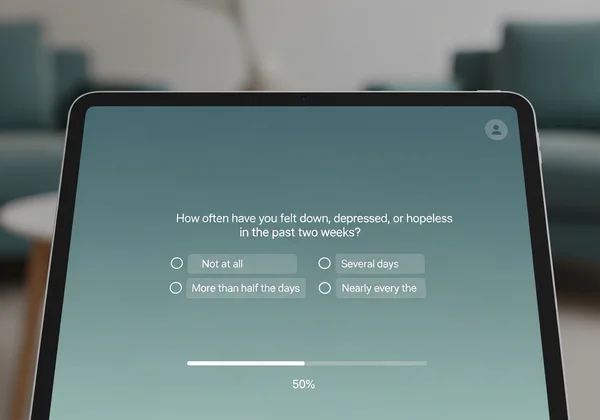
The PCL-5 is a 20-question self-report assessment that helps measure the 20 symptoms of Post-Traumatic Stress Disorder (PTSD) as outlined in the official Diagnostic and Statistical Manual of Mental Disorders, 5th Edition (DSM-5). For veterans, it serves as a crucial, confidential first step. It’s not a formal diagnosis, but rather a personal inventory—a way to check in with yourself and see how you’ve been doing over the last month.
The prevailing military culture, which often emphasizes resilience and toughness, can make it exceptionally challenging for service members to acknowledge or discuss their mental health struggles. The PCL-5 bypasses that barrier by offering a private, objective way to reflect on your experiences. It translates feelings and reactions that may seem confusing or overwhelming into a clear, understandable format. This process can be validating, helping you recognize that what you're experiencing is real and shared by many other service members.
The PCL-5 and DSM-5: Official Standards for Trauma Symptom Assessment
It's important to know that the PCL-5 isn't just another online quiz. It is a scientifically validated instrument that aligns directly with the diagnostic criteria used by mental health professionals worldwide, including those at the Department of Veterans Affairs (VA). Each question on the PCL-5 corresponds to a specific PTSD symptom defined in the DSM-5.
This connection to official standards for trauma ensures the assessment is reliable and meaningful. When you take the PCL-5, you are using the same framework that a clinician would use to begin a conversation about PTSD. This makes it a respected and valuable tool, whether for personal insight or as a starting point for a conversation with a healthcare provider. It provides a common language to discuss your experiences accurately.
Beyond Combat: Recognizing Service-Related Traumas
When people think of military trauma, they often picture direct combat. While combat is a significant source of trauma for many, it is far from the only one. The PCL-5 is designed to be sensitive to the wide range of potentially traumatic events that can occur during military service.
Recognizing service-related traumas in all their forms is essential. These can include experiencing or witnessing serious injury, involvement in a devastating accident, military sexual trauma (MST), the loss of a fellow service member, or even the intense stress of deployment itself. The PCL-5 doesn't ask what your trauma was; it asks how you are feeling now. This inclusive approach ensures that every veteran, regardless of their specific role or experience, can use the tool to gain valuable self-understanding.

Decoding Your PCL-5 Score: Insights for Military Personnel
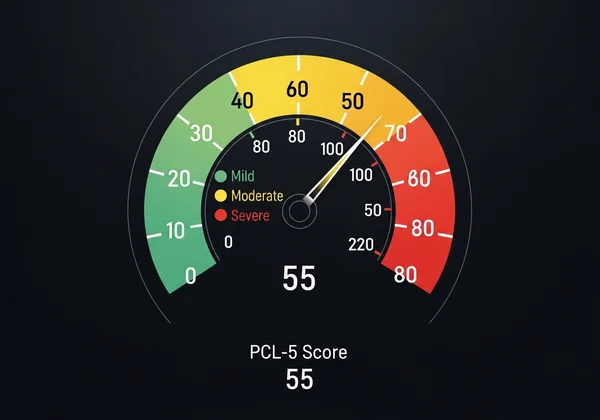
After completing the 20 questions, you will receive a total severity score ranging from 0 to 80. This number is a snapshot of your symptom severity over the past month. It is a guide, not a judgment. Its purpose is to provide you with a baseline—a starting point for understanding and a way to measure progress over time.
For many veterans, seeing a number can make their abstract feelings more concrete. It can validate the struggles they've been facing internally. A higher score indicates greater symptom severity, suggesting that PTSD symptoms may be significantly impacting your daily life. A lower score might indicate milder symptoms or that you are managing them effectively. The key is to use this score as information, not a label. You can get your PCL-5 score immediately and confidentially on our platform.
Interpreting PCL-5 Severity: Understanding Your Score from 0 to 80
Understanding score severity helps put your results into context. While there isn't a magical number that perfectly defines everyone's experience, clinicians often use a score of 31-33 as a provisional cutoff score, suggesting that PTSD symptoms are present and may warrant further evaluation.
Here’s a general guide:
- 0-30: Symptoms are likely in the mild range or may not be causing significant distress.
- 31-50: Symptoms are in the moderate range and are likely causing noticeable problems in your life.
- 51-80: Symptoms are in the severe range and are likely causing significant and pervasive distress.
Remember, this is just a guide. The most important factor is how you feel and how your symptoms are affecting your work, your relationships, and your overall well-being. A free PTSD test online can provide you with this initial score.
PCL-5 vs. Diagnosis: Its Role in VA PTSD Assessment and Claims
This is a critical distinction: the PCL-5 is a screening tool, not a diagnostic tool. It cannot diagnose you with PTSD. A formal diagnosis can only be made by a qualified mental health professional after a comprehensive evaluation.
However, the PCL-5 plays a significant role in VA PTSD assessment. It is widely used within the VA system to screen for PTSD and to monitor a veteran's progress during treatment. If you are pursuing a VA claim for PTSD, your PCL-5 scores may be part of your overall evaluation. Bringing your results from a self-assessment can be a productive way to start a conversation with a VA provider, showing that you have proactively engaged with your mental health.
Your Next Steps: Connecting PCL-5 Results to Veteran Support Resources
Getting your PCL-5 score marks a significant starting point, not a finish line. This information empowers you to make informed decisions about your mental health. The path forward is about taking proactive steps toward healing and well-being, and there are many resources available to support you on this journey.
Accessing Professional Help and Department of Veterans Affairs Resources
If your score and personal experience suggest you could benefit from support, the next step is connecting with professional help. The Department of Veterans Affairs offers extensive mental health services specifically for veterans. You can reach out to your local VA medical center, a Vet Center, or use the Veterans Crisis Line if you are in immediate distress.
Accessing professional help is a courageous step. A mental health provider can conduct a full assessment, provide a formal diagnosis if appropriate, and work with you to develop a treatment plan. This may include therapies proven to be effective for PTSD, such as Cognitive Processing Therapy (CPT) or Prolonged Exposure (PE) therapy.

Beyond the Numbers: Unlocking Deeper Understanding with AI-Driven Reports
A score gives you a what, but it doesn't always give you a why or a how. This is where modern technology can offer more profound insights. Beyond the free initial score, our platform offers a unique, optional AI-driven report. This report goes further than a simple number, providing a personalized analysis of your responses.
Unlocking deeper understanding is the goal. The AI report can help identify specific patterns in your symptoms, highlight your personal strengths and challenges, and explain how certain symptom clusters might be affecting different areas of your life—from sleep to relationships. It also offers actionable, personalized suggestions for coping strategies and next steps. For veterans looking for more than just a score, this AI-powered analysis can be a uniquely insightful resource.
Empowering Your Journey: Taking Proactive Steps for Mental Wellness
Understanding your experiences through a tool like the PCL-5 is a powerful act of self-advocacy. It's about taking control of your narrative and moving forward with knowledge and purpose. Your military service has shaped who you are, but it doesn't have to dictate your future. You have the power to define your path forward. By taking proactive steps for your mental wellness, you are honoring your own strength and resilience.
Whether you use the PCL-5 for personal reflection, as a conversation starter with a loved one, or as a bridge to professional care, it is a valuable asset on your path to healing. Your journey is your own, but you don't have to walk it alone.
Ready to gain clarity? Take the first step on our homepage today.
Frequently Asked Questions for Veterans About the PCL-5
Can the PCL-5 diagnose PTSD in veterans?
No, the PCL-5 is a highly effective screening tool, but it cannot provide a medical diagnosis. A formal PTSD diagnosis can only be made by a qualified mental health professional after a thorough clinical evaluation. The PCL-5 is an excellent starting point for that conversation.
What is a high PCL-5 score for military service members?
A score of 31-33 is often used as a clinical threshold to suggest that a person's symptoms warrant further assessment for PTSD. However, any score that comes with personal distress is significant. The most important thing is how the symptoms are affecting your quality of life, not just the number itself.
How is the PCL-5 used in VA PTSD assessments?
The VA frequently uses the PCL-5 as a standard tool to screen veterans for PTSD symptoms during intake and to monitor their progress throughout treatment. It helps clinicians quickly get a sense of symptom severity and track how a veteran is responding to therapy over time.
Who can administer the PCL-5 for a veteran?
The PCL-5 is a self-report questionnaire, meaning you can administer it to yourself. That's the primary benefit of a confidential online tool. For clinical purposes, it is often administered by a primary care provider, a psychologist, a psychiatrist, or a counselor. You can start your assessment securely online anytime.
Are the 20 symptoms of PTSD on the PCL-5 specific to combat trauma?
No, the 20 symptoms are universal and apply to trauma of any kind. They are not specific to combat. This allows the PCL-5 to be relevant and useful for veterans who have experienced any type of service-related trauma, including military sexual trauma (MST), training accidents, or other distressing events.