Anxiety and Post Traumatic Stress: How PTSD Anxiety Symptoms Fit Together
Anxiety and post traumatic stress often overlap, but they are not the same experience. Anxiety can feel like worry, dread, body tension, or panic. Post-traumatic stress begins with exposure to a terrifying or deeply distressing event, then continues when the mind and body react as if danger may still be nearby. If you are trying to understand your own pattern, an educational tool such as a private PCL-5 self-assessment can help you organize symptoms before a professional conversation. It cannot replace clinical care, but it can make confusing reactions easier to name.

How Anxiety Fits Inside Post-Traumatic Stress
PTSD is grouped with trauma and stressor-related conditions because the starting point is trauma exposure, not general worry alone. Anxiety may still be one of the most noticeable parts of the picture. A person may feel keyed up, unsafe, watchful, startled by sounds, or tense in situations that resemble the traumatic event.
General anxiety often centers on future problems: health, money, work, relationships, uncertainty, or social judgment. PTSD-related anxiety is more tightly connected to trauma reminders and threat detection. A smell, date, tone of voice, location, news story, or body sensation can pull the nervous system into alarm even when the current setting is not dangerous.
That difference matters because coping with PTSD anxiety is not only about "thinking less." It often involves learning triggers, building grounding skills, reducing avoidance gradually with support, and working with a trauma-informed clinician when symptoms are intense.
Trauma Cues Can Make Anxiety Feel Sudden
A PTSD attack or episode can feel abrupt because the trigger is not always obvious. Some reminders are external, such as a place, sound, object, or conversation. Others are internal, such as a racing heart, shallow breathing, or a feeling of being trapped. The person may feel fear first and understand the reminder only later.
During these moments, anxiety can include a fast heartbeat, sweating, shaking, nausea, chest tightness, dizziness, muscle tension, or a strong urge to escape. These physical symptoms can be frightening, especially with intrusive memories or images.
Hypervigilance Keeps the Body Scanning
Hypervigilance means staying alert for danger. In everyday life, it may look like sitting near exits, checking locks, jumping at noise, reading facial expressions, or struggling to relax even in safe places. The body is trying to protect the person, but the cost can be exhaustion, irritability, sleep disruption, and difficulty concentrating.
PTSD Anxiety Symptoms Across the Four Main Clusters
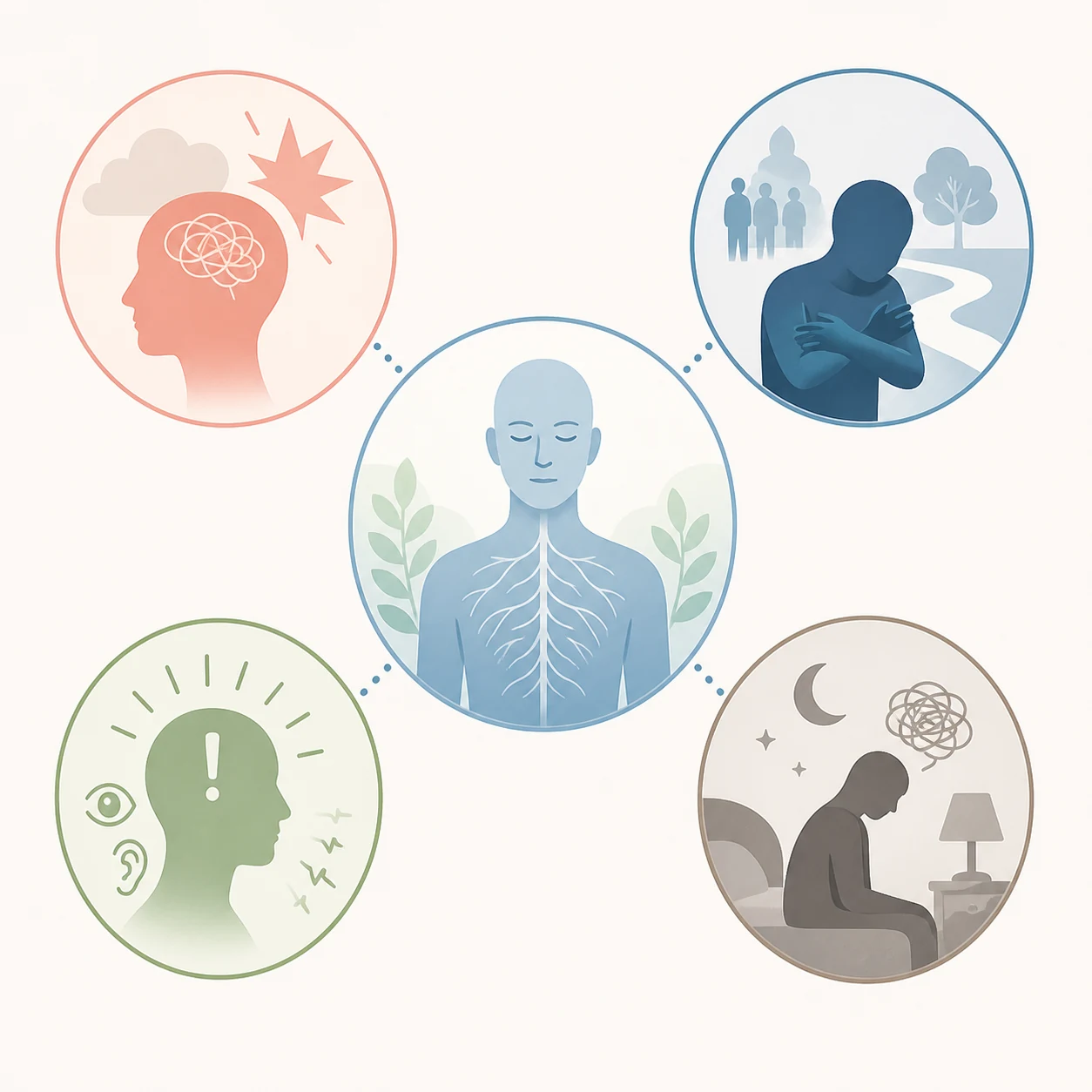
Many people search for PTSD anxiety symptoms because anxiety appears in several parts of post-traumatic stress. Instead of treating anxiety as one isolated symptom, it helps to view it across four common PTSD symptom clusters.
Intrusion Symptoms
Intrusion means the traumatic experience comes back into awareness when the person does not want it to. This can include unwanted memories, nightmares, flashbacks, emotional distress after reminders, or strong body reactions when something evokes the event. Anxiety in this cluster may feel like being pulled back into danger, even while part of the mind knows the event is not happening now.
Avoidance Symptoms
Avoidance is an attempt to stay away from reminders. A person may avoid places, people, conversations, media, feelings, or memories linked to trauma. Avoidance can reduce anxiety briefly, which makes it understandable. Over time, though, it can shrink a person's world and make reminders feel even more powerful.
Changes in Mood and Thinking
Post-traumatic stress can affect beliefs, emotions, memory, and relationships. Someone may feel guilt, shame, anger, numbness, disconnection, reduced interest in ordinary activities, or persistent negative beliefs about themselves or the world. Anxiety can blend with depression here, especially when the person feels unsafe, isolated, or unable to trust their own reactions.
Arousal and Reactivity Symptoms
This cluster is where anxiety often feels most physical. Sleep problems, irritability, concentration trouble, being easily startled, risk-taking, and feeling constantly on guard can all appear. These reactions are not character flaws. They are signs that the stress-response system may be staying activated too often or too strongly.
What About the "17 Symptoms of PTSD" Question?
Search results often surface the phrase "what are the 17 symptoms of PTSD," but PTSD is usually explained through symptom criteria and clusters rather than one universal 17-item public checklist. The PCL-5 uses 20 self-report items that map to DSM-5 PTSD symptom clusters and ask how much each issue bothered a person during the past month.
That 20-item structure is useful because it turns a vague question into a more organized reflection. Instead of asking "Do I have PTSD?" in a yes-or-no way, the checklist helps separate intrusion, avoidance, negative changes in mood and thinking, and arousal symptoms. A higher score can suggest more symptom burden, while repeated scores can help show whether symptoms are changing over time.
If you want a structured way to review recent symptoms, the online PTSD checklist format can support self-reflection. Treat the result as information to discuss, not as a final answer.
Why the Past Month Timeframe Helps
Trauma reactions can shift from week to week. A past-month timeframe helps reduce the noise of distant memories while still capturing current sleep, avoidance, intrusive thoughts, body reactions, and mood changes. It can also make it easier to notice patterns after therapy sessions, stressful anniversaries, major life changes, or new reminders.
Why a Checklist Is Not the Whole Story
A checklist cannot capture context, safety, culture, physical health, substance use, grief, ongoing danger, or other mental health concerns on its own. Anxiety and post traumatic stress may also appear alongside depression, panic attacks, substance use, chronic pain, or dissociation. A trained professional can look at the broader picture and help decide what kind of support fits.
Causes, Types, and Co-Occurring Anxiety or Depression
PTSD can follow direct experience of trauma, witnessing trauma, learning that something traumatic happened to someone close, or repeated exposure to details of traumatic events through certain work roles. Examples can include assault, abuse, combat, serious accidents, disasters, sudden loss, medical trauma, or prolonged interpersonal threat.
Not everyone who experiences trauma develops persistent post-traumatic stress. Risk can be shaped by the severity and duration of the event, earlier trauma, social support, ongoing stress, personal history, and access to care. Protective factors can include safety, practical support, stable routines, and early connection with trustworthy people.
Types of PTSD Terms You May See
People may encounter terms such as acute stress, delayed expression, dissociative symptoms, chronic PTSD, complex PTSD, and post traumatic stress syndrome. These terms are not always used the same way across websites, research, and clinical conversations. In general, they point to differences in timing, symptom pattern, trauma history, or the presence of dissociation and relationship difficulties.
Complex PTSD is often discussed when trauma was repeated, prolonged, or interpersonal, especially when it happened during development. It may include PTSD symptoms plus deeper struggles with emotion regulation, self-image, and relationships. Because terminology can vary, it is wise to bring questions about types of PTSD to a qualified mental health professional.
Why Anxiety and Depression Often Travel Together
PTSD and anxiety and depression can reinforce one another. Avoidance can reduce opportunities for connection. Poor sleep can worsen irritability and concentration. Hypervigilance can make the body tired. Intrusive memories can feed shame, grief, or hopelessness. When several patterns are present, support often needs to address the whole system rather than one symptom in isolation.
PTSD Treatment and Coping With Anxiety
PTSD treatment often includes trauma-focused psychotherapy, skills for managing distress, and sometimes medication when appropriate. Common therapy approaches may include trauma-focused cognitive behavioral therapy, cognitive processing therapy, prolonged exposure, EMDR, or other evidence-informed methods delivered by trained clinicians. Medication decisions should be made with a qualified prescriber who can consider benefits, side effects, and other health factors.
Self-care is not a substitute for professional support, but it can make daily life more manageable. The goal is not to force yourself to "get over it." The goal is to build enough steadiness that you can notice symptoms, respond to them, and seek support when needed.
A Grounding Plan for PTSD Anxiety
When anxiety rises, try a short plan that brings attention back to the present:
- Name the date, place, and one fact that tells you where you are now.
- Put both feet on the floor and notice pressure, temperature, and texture.
- Slow the exhale for several breaths without forcing deep breathing.
- Look for five neutral objects and describe them in plain words.
- After the wave lowers, write down what may have triggered it.
This kind of plan is simple on purpose. During high arousal, the brain often works better with concrete steps than with complex explanations.
A Weekly Symptom Tracking Routine
Choose one regular time each week to note sleep, triggers, intrusive memories, avoidance, body tension, mood, and support used. Keep the notes brief. You are looking for patterns, not perfect records. If you use a PCL-5-style score, compare it with real-life context: Was there a stressful anniversary? Did sleep change? Did a new coping skill help? Did symptoms interfere with work, school, parenting, or relationships?

Using a PCL-5 Reflection Without Overreading It
A PCL-5 reflection is most helpful when it is treated as a snapshot, not a verdict. It can help you describe symptoms more clearly, notice whether anxiety is tied to trauma reminders, and prepare examples for a therapist, doctor, counselor, or trusted support person.
If symptoms are intense, last more than a month, interfere with daily life, or include thoughts of self-harm, professional help matters. If you may be in immediate danger or feel unable to stay safe, contact local emergency services or a crisis line in your area.
For a low-pressure next step, you can review your recent experiences with a confidential PCL-5-based reflection. Use the result as a conversation starter and a way to track change, while keeping space for professional guidance and your own lived context.
FAQ
What does it feel like living with PTSD?
Living with PTSD can feel like carrying an alarm system that turns on too easily. Some people have intrusive memories or nightmares. Others feel numb, detached, irritable, watchful, or exhausted. Many people move between anxiety, avoidance, low mood, and brief periods of feeling more settled.
How can I cope with PTSD anxiety?
Start with present-moment grounding, predictable routines, sleep support, and connection with safe people. Tracking triggers can help you see patterns. If anxiety is frequent, intense, or limiting your life, trauma-informed therapy can provide structured support.
How is PTSD assessed?
PTSD is assessed through a careful review of trauma exposure, symptoms, duration, distress, life impact, and related concerns such as depression, anxiety, substance use, or physical health. Self-report tools can organize information, but a full evaluation considers much more than a score.
What are common PTSD anxiety symptoms?
Common PTSD anxiety symptoms include hypervigilance, being easily startled, panic-like body sensations, avoidance of reminders, distress after triggers, sleep trouble, irritability, concentration problems, and a persistent sense that danger may return.
Are PTSD and anxiety the same thing?
No. Anxiety can occur for many reasons. PTSD is specifically connected to traumatic stress and includes clusters such as intrusion, avoidance, negative mood or thinking changes, and arousal changes. The two can overlap, and some people experience both.
Can PTSD include depression too?
Yes. Depression can appear alongside post-traumatic stress, especially when sleep, relationships, identity, or daily functioning are affected. Low mood, numbness, guilt, shame, or loss of interest deserve attention, particularly if they persist.
How can I recover from PTSD?
Recovery often involves safety, support, trauma-informed therapy, coping skills, and time. Many people improve with the right care, but the path is individual. A helpful first step is noticing symptoms clearly and sharing them with someone qualified to help.